Dr. Samir C. Grover — Toronto gastroenterologist, endoscopist, and medical educator at the University of Toronto Division of Gastroenterology and Hepatology

Samir C. Grover

MD, MEd, FRCPC, AGAF, FASGE, CAGF

I lead a team that builds things at the intersection of AI, medicine, and education.


2024 – SHN
I'm Executive Vice-President, Academics at Scarborough Health Network, where I lead SHN and its clinical affiliates as teaching sites for SAMIH — the Scarborough Academy of Medicine and Integrated Health. I'm also building SHN's research enterprise alongside Kevin Kuo at SHNRI. We've doubled our medical education presence and launched the Summer of Vibes innovation program.
2024 – SHNRI

I hold the Pialis Family Chair in Education Research, a hospital research chair at SHN Research Institute. My research focuses on how we train physicians, how we assess competency in procedural medicine, and how AI is changing both.
2019 – Division of GI/Hep
University of Toronto
Associate Professor, Department of Medicine, Temerty Faculty of Medicine, University of Toronto. I've mentored over 150 trainees, built a simulation research lab, founded the University of Toronto Endoscopic Simulation Course, led RCTs on simulation in colonoscopy training, and created the Toronto Upper GI Cleaning Score (TUGCS).
2018 – 2023
Program Director, Adult Gastroenterology Residency, University of Toronto. I oversaw the training program for Canada's largest GI division.
2009 – 2023 St. Michael's Hospital

Attending Gastroenterologist at St. Michael's Hospital (Unity Health Toronto). Clinical practice in endoscopy with a focus on management of rare and difficult-to-treat gastrointestinal disorders.
1997 – 2009
University of Toronto
MEd in Higher Education from OISE, Advanced Therapeutic Endoscopy Fellowship under Dr. Norman Marcon at St. Michael's, Internal Medicine and Gastroenterology residencies (UofT), MD (University of Toronto), and BSc (Biology, University of Ottawa). Along the way I got hooked on teaching and never really stopped.
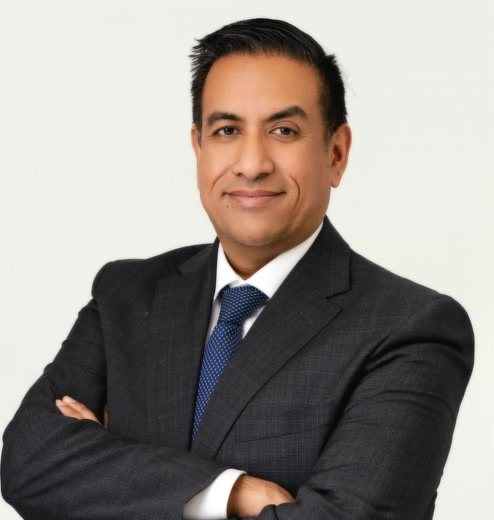
bio

I'm a gastroenterologist and clinician-educator at the University of Toronto and Scarborough Health Network. I spent 15 years at St. Michael's Hospital doing endoscopy, teaching residents, running simulation research, and eventually directing the GI training program. In 2023 I moved to SHN to help stand up the clinical teaching infrastructure for our large expansion as the clinical site of SAMIH, a collaborative integrated health program between the Temerty Faculty of Medicine and the University of Toronto Scarborough Campus. I've published 120+ papers, mostly on how people learn to do procedures and what happens when they don't. I build student programs like the Summer of Vibes working with Dr. Joshua Landy. More recently I've been thinking about what happens to all of that when AI enters the picture and am building around that.

thesis

I came up through clinical medicine and got pulled into teaching early. That turned into simulation research, then competency assessment, then program direction, then administration. Each layer gave me a different view of the same problem: how do you actually know when a physician is ready to practice independently, and how do you build systems that get them there?

That question has taken on a completely different shape now that AI is here. The physician's role is changing. Tasks we spent years training people to do are becoming automatable. Diagnosis, image interpretation, documentation, evidence synthesis. If AI can do these things faster and more reliably, then what exactly are we training physicians to be? That is not a hypothetical question anymore. It is the central question in medical education.

I think about this on three levels. First, how AI is redefining the physician role itself and what competencies actually matter going forward. Second, how we teach within this new reality, where trainees will work alongside AI from day one of residency. And third, how AI can be used to completely reframe what medical school and medical education look like, from assessment to curriculum design to the structure of clinical training. That is what I am building toward.


teaching & programs
UofT Endoscopic Simulation Course
I founded and have directed this course for 16 years. Focus on deliberate practice, competency assessment, and cognitive load in procedural training.
SAMIH — Scarborough Academy of Medicine and Integrated Health
I lead SHN and its clinical affiliates as teaching sites for this large project in Scarborough that includes U of T's 5th undergraduate medical academy.
Summer of Vibes — SHN RISE Program
A student-driven healthcare innovation sprint I founded at SHN. Undergraduates build working AI prototypes for real clinical problems over 10–16 weeks. 2025 pilot: 13 projects. 2026: ~50 students across 8 innovation taskforces. Grand Demo Day at UTSC.
The AI-Augmented Physician
A clinician-developer elective I co-designed for GI fellows. Three 90-minute sessions: vibe-code a clinical prototype, red-team it with faculty, demo it to leadership. Funded by UofT GI Division Innovation Grant. Co-led with Dr. Joshua Landy. Launching October 2026.

writing

I write a Substack series on AI in medical education. Topics include how AI is reshaping the physician role, the apprenticeship model under pressure from AI-augmented training, faculty development as the bottleneck, self-assessment and competency in the age of automation, and practical AI tooling for trainees and educators.


selected publications
The Lancet Gastroenterology & Hepatology, 2024
Grover SC, Walsh CM
Gastroenterology, 2023
Grover SC, Ong A, Bollipo S, Dilly CK, Siau K, Walsh CM
Gastrointestinal Endoscopy, 2017
Grover SC, Scaffidi MA, Khan R, et al.
Endoscopy, 2023
Scaffidi MA, Gimpaya N, Li J, et al., Grover SC
Cochrane Database of Systematic Reviews, 2018 (updated 2025)
Khan R, Plahouras J, Johnston BC, Scaffidi MA, Grover SC, Walsh CM
JAMA Internal Medicine, 2019
Khan R, Nugent CM, Scaffidi MA, Gimpaya N, Grover SC
Gastrointestinal Endoscopy, 2015
Grover SC, Garg A, Scaffidi MA, et al.

120+ publications total. Full list on Google Scholar, ORCID, or groverlab.ca.


miscellaneous